

Closing a credit card may look like an easy way to simplify your finances. You may be thinking about getting rid of an annual fee, stopping the use of an old card, managing fewer accounts, or switching to a credit card with more useful rewards and benefits.
However, closing an account is a decision worth considering carefully because it can change parts of your credit profile.
Table of Contents
Can Closing a Credit Card Lower Your Credit Score?
Closing a credit card can influence your credit score, but it does not automatically mean your score will decrease. The potential impact depends on factors such as your total available credit, current balances, credit utilization, the age of the account, and the other credit accounts listed on your profile.
For some consumers, closing one card may make little difference. For others, particularly those who already use a large percentage of their available credit, losing a credit limit could cause their utilization to rise and potentially lower their score.
The important point is that you do not necessarily need to close a credit card just because you rarely use it. Understanding what could happen before closing the account can help you make a decision that supports your long-term credit goals.
Why Closing a Credit Card Can Affect Your Credit
Credit scoring models evaluate different aspects of your credit history. One factor they consider is your revolving credit usage, which compares the balances you owe with the credit limits available to you.
For example, suppose you currently have two credit cards:
- Card A: $5,000 credit limit with a $1,000 balance
- Card B: $5,000 credit limit with a $0 balance
Together, the cards provide $10,000 in available credit, while your total balance is $1,000. Your overall utilization is therefore 10%.
Now assume you close Card B. Your available credit would fall to $5,000 while the $1,000 balance on Card A remains. Your overall utilization would increase to 20%.
A higher credit utilization ratio may cause your credit score to drop.
Closing a Credit Card Does Not Guarantee a Credit Score Drop
Closing a credit card does not automatically cause your credit score to fall.
If you have other credit cards with substantial available limits and maintain relatively low balances, closing one account may have only a small effect on your credit profile.
For instance, a consumer with several established credit cards, low balances, and a strong credit history may experience less impact than someone with only a couple of cards who closes an account with a high credit limit.
Instead of assuming that closing any credit card will hurt your score, consider how the account fits into your complete credit profile.
The Effect Depends on Your Credit Profile
There is no universal outcome when someone closes a credit card. The result can vary depending on the information in that person’s credit reports and how the closed account changes their overall credit situation.
Before closing a card, review factors such as:
- Your total available revolving credit
- The balances on your credit cards
- Your current credit utilization
- How old the account is
- The Number of Other Credit Accounts You Currently Have
- Whether you expect to apply for a loan or credit card soon
A change that barely affects one consumer could have a more noticeable effect on another person’s credit score.
How Closing a Credit Card Can Change Credit Utilization
One of the main potential concerns with closing a credit card is an increase in credit utilization.
When you close an account, the credit limit attached to that card is no longer part of your available revolving credit. If your existing balances remain unchanged, the percentage of credit you are using can increase.
What Is Credit Utilization?

Credit utilization refers to the percentage of your available revolving credit that is currently being used.
For example, suppose your credit cards have a combined credit limit of $10,000 and you owe $2,000 across those accounts. Your utilization would be 20%.
Calculation:
$2,000 ÷ $10,000 × 100 = 20%
In general, lower utilization is viewed more favorably by credit scoring models.
You also do not need to carry a credit card balance from month to month to build credit. Using a card responsibly and paying the balance in full can still help you establish positive credit habits.
Why Your Available Credit Is Important
Your available credit helps put your existing balances into perspective.
For example, assume you have three credit cards with a combined credit limit of $15,000 and total balances of $3,000. Your overall utilization is 20%.
If you close one card that has a $5,000 credit limit, your available credit would drop to $10,000. If your $3,000 balance stays unchanged, your utilization would increase to 30%.
Notice that your debt did not increase. The change happened because your total available credit became smaller.
This is why closing a card with a high credit limit can potentially have a greater effect on your credit utilization.
Credit Utilization Example After Closing a Card
Consider the following example to see how closing an account can change your utilization.
Before closing the card:
- Total credit limits: $20,000
- Total credit card balances: $4,000
- Overall utilization: 20%
Now imagine you close a credit card with a $10,000 limit.
After closing the card:
- Remaining available credit: $10,000
- Total balances: $4,000
- Overall utilization: 40%
Your debt stayed at $4,000, but your utilization increased from 20% to 40% because you removed half of your available credit.
This is why checking your current balances and total credit limits before closing an account can be a useful step.
What Happens to Your Credit History When You Close a Credit Card?
Closing a credit card does not usually erase the account from your credit reports immediately.
A closed account can continue to appear on your credit reports and may still be part of your credit history for a period of time.
The account’s payment history can therefore continue to provide information about how you managed credit.
Does a Closed Credit Card Remain on Your Credit Report?
Yes. Closing a credit card does not generally remove the account from your credit reports right away.
Your report may indicate that the account has been closed while still displaying details such as your payment record and account status.
In other words, closing the card does not erase its previous history overnight.
How long the account remains on your credit reports can vary depending on the type of information involved and the circumstances surrounding the account.
Can Closing an Older Card Change Your Credit Age?
Closing an older credit card does not mean that its history immediately stops being part of your credit profile.
A closed account can continue appearing on your credit reports, allowing its previous history to remain available for some time.
The potential impact can become more noticeable later if the account eventually drops from your reports.
If the closed card was among your oldest accounts, its eventual removal could influence factors related to the age of your credit history.
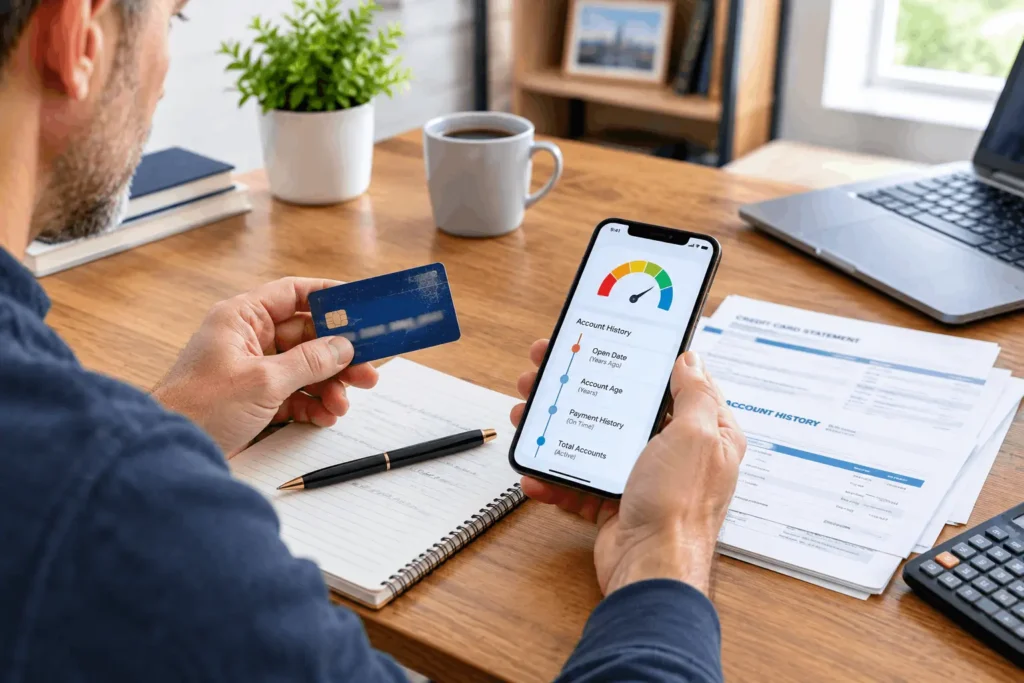
Why Older Credit Accounts Can Be Valuable
The amount of time you have been using credit is one consideration in your overall credit profile.
Long-standing accounts can demonstrate that you have experience managing credit over an extended period.
Because of this, it is worth carefully evaluating an older credit card before closing it, especially when the card has no annual fee and is not creating financial difficulties.
That does not mean every old credit card should remain open. Account age is simply one factor to weigh alongside your overall financial situation.
When Closing a Credit Card Could Be a Reasonable Choice
There is no rule that says you must keep every credit card open forever.
Closing an account can sometimes be the practical choice when the card no longer provides enough value or creates financial concerns.
When the Annual Fee No Longer Makes Sense
An annual fee can become difficult to justify when the rewards and benefits you receive are worth less than what you pay.
For instance, paying a $95 yearly fee for a card you rarely use may not make financial sense.
Before closing the account, contact the card issuer and ask whether you can move to a different card from the same issuer that does not have an annual fee.
When You Rarely or Never Use the Card
You may consider closing a card that has been sitting unused for a long time, particularly if you have no plans to use it in the future.
However, an unused card with no annual fee does not necessarily need to be closed.
Leaving the account open can preserve that credit line, which may help maintain a lower overall credit utilization ratio.
When the Card Makes Overspending Harder to Control
Credit cards can be convenient, but having access to additional credit can sometimes encourage spending beyond your budget.
If a particular card makes it harder for you to control your spending or avoid unnecessary debt, closing the account may be a reasonable financial decision.
Protecting your financial stability is more important than trying to avoid a potential temporary change in your credit score.
If closing the account helps you stay out of debt and maintain healthier spending habits, that benefit may be more important than a possible credit-score effect.
When Another Card Better Fits Your Needs
Your financial priorities can change over the years.
A credit card that once offered useful rewards or benefits may no longer match the way you spend money.
Before canceling it, check whether the issuer allows a product change or downgrade to another card.
Depending on the issuer and available options, this could let you move to a different card while keeping the existing credit line open.
When You May Want to Reconsider Closing a Credit Card
Although closing a card can sometimes be the right decision, certain situations deserve extra consideration before you take action.
If You Have Balances on Other Cards
Closing one credit card can lower the total amount of credit available to you.
If you already have balances on other cards, reducing your available credit could cause your overall credit utilization to rise.
For example, someone who is already using a significant percentage of their available revolving credit could see their utilization increase further after closing another account.
If your situation allows, reducing existing card balances before closing an account may help limit this effect.
If the Card Has a High Credit Limit
A credit card with a substantial limit may represent a large share of your total available revolving credit.
Closing that account removes its credit line from your available credit, which could cause your utilization percentage to increase even if the card has a $0 balance.
Before closing the account, compare its credit limit with the limits on your other credit cards to understand how much your total available credit could change.
If It Is One of Your Longest-Standing Accounts
An older credit card may have accumulated years of payment information that forms part of your credit history.
If the card does not charge an annual fee and you can use it responsibly, keeping it open may be worth considering.
Still, account age should not determine the decision by itself. Consider the card’s fees, your spending behavior, existing debt, and broader financial objectives as well.
If You Plan to Apply for a Major Loan Soon
If you are preparing to apply for a mortgage, auto loan, or another significant credit product, you may want to avoid unnecessary changes to your credit accounts.
Closing a card can alter your available credit and potentially affect your utilization at a time when lenders are evaluating your financial profile.
If a major loan application is coming up, review your credit situation before closing the account and avoid making unnecessary changes when possible.
The objective is to maintain a stable, responsibly managed credit profile while keeping debt and credit utilization under control.
How to Close a Credit Card Without Unnecessary Credit Damage
If you decide that closing a credit card is the right choice, taking a few simple steps can help you avoid unnecessary problems.
Closing the account carefully will not guarantee that your credit score will stay the same, but it can help you avoid missed payments, lost rewards, or other issues after the account is closed.
Pay Off the Balance First
Before closing your credit card, try to pay the balance in full.
You generally cannot simply make the balance disappear by closing the account. If you still owe money, you will remain responsible for paying it according to the card’s terms.
Paying off the balance first also makes the closing process easier to manage. Make sure any final payment has been processed before assuming the account is completely settled.
If you cannot pay the balance in full, check with the card issuer about your options before closing the account.
Redeem or Transfer Your Rewards
If your credit card earns cash back, points, or miles, check what happens to your rewards before closing the account.
Some rewards may be lost when an account is closed, depending on the card issuer’s rules and the type of rewards program.
Before you cancel the card, review your rewards balance and redemption options. If you have valuable rewards available, consider using them first or determining whether they can be transferred to another eligible account.
Check for Recurring Payments
Review your recent credit card statements and look for subscriptions or automatic payments linked to the card.
These might include:
- Streaming services
- Gym memberships
- Insurance payments
- Phone bills
- Software subscriptions
- Online memberships
Update your payment information before closing the card.
Otherwise, a recurring payment could be declined after the account is closed, potentially causing a missed payment or service interruption.
Contact the Card Issuer
Once you have handled your balance, rewards, and recurring payments, contact the credit card issuer and request that the account be closed.
You can usually find the issuer’s customer service number on the back of the card or on your billing statement.
Tell the representative that you want to close the account. Before agreeing, you can also ask whether there is a retention offer, fee waiver, or another account option that may better fit your needs.
If you still want to close the account, ask the representative to confirm the next steps.
Confirm the Account Is Closed
After requesting closure, keep records of the request.
Write down the date you contacted the issuer and, if available, the confirmation or reference number provided by the representative.
Check your online account or a later statement to make sure the account status has been updated.
Continue checking for any remaining charges or adjustments. Closing the card does not necessarily mean every transaction has been finalized on the same day.
Check Your Credit Reports After Closing
After the account has been closed and enough time has passed for reporting to update, review your credit reports.
Look for the account’s status and make sure the information appears accurate.
You can obtain your credit reports through the official federally authorized source, AnnualCreditReport.com.
Checking your reports can also help you spot other information that may need attention.
Should You Cancel a Credit Card That Has a $0 Balance?
A zero-balance credit card may not need to be closed simply because you are no longer using it.
In some situations, keeping the account open can preserve your available credit and help maintain a lower overall utilization rate.
However, there are also situations where closing a zero-balance card can be a reasonable decision.
When Keeping the Card Open May Be Better
Keeping a card open may make sense when it has:
- No annual fee
- A useful credit limit
- A long account history
- Benefits you still use
- No temptation to overspend
If you can manage the account responsibly, an unused card does not necessarily need to be closed.
You can keep it open while using your other cards more actively.
Just remember that card issuers may have their own policies regarding inactive accounts. An issuer could eventually close an unused account on its own.
When Closing the Card Could Be Reasonable
Closing a zero-balance card may make sense if it has an expensive annual fee, creates spending problems, or no longer fits your financial needs.
For example, paying an annual fee for a card you rarely use may not be worthwhile.
Similarly, if having the account available makes it difficult for you to control spending, closing it may help you stay within your budget.
The key is to consider the financial benefit of closing the account alongside the possible effect on your credit profile.
Will Closing a Credit Card Make It Disappear From Your Credit Report?

Closing a credit card and removing it from your credit report are two different things.
When you close an account, the credit card account can continue to appear on your credit reports.
The account may be identified as closed while information about its payment history remains available for credit reporting purposes.
How Closed Accounts Are Reported
A closed credit card may continue to show information such as the account’s payment history, balance, and status.
Closing the account does not normally erase its previous payment history.
If the account was managed responsibly, its positive payment history can continue to be part of your credit history after closure.
However, a closed account is no longer an active source of available revolving credit. That distinction can matter when looking at your overall credit utilization.
How Long a Closed Account May Remain on Your Credit Report
How long a closed account remains on a credit report can depend on factors such as the account’s payment history and the circumstances surrounding its closure.
Generally, positive closed accounts can remain on credit reports for years after closure, while certain negative information has separate reporting rules.
Because reporting rules can vary depending on the type of information, do not assume that closing a card will immediately remove it from your credit report.
If you are concerned about a specific account, review your credit reports and check the information being reported by the credit bureaus.
Can You Reopen a Closed Credit Card?
Sometimes, you may be able to reopen a credit card after closing it, but there is no guarantee.
Whether an issuer allows an account to be reopened depends on its policies, the type of account, and how long ago the account was closed.
When a Card Issuer May Allow Reopening
Some issuers may be willing to reopen an account if you contact them shortly after closing it.
In other situations, the issuer may require you to submit a new application instead.
A new application could involve another credit inquiry and may result in different approval terms, so do not assume that reopening an old card will work the same way as applying for a new one.
If you recently closed a card and changed your mind, contacting the issuer as soon as possible may give you the best chance of finding out whether reopening is available.
What to Ask Your Credit Card Issuer
If you want to reopen a closed card, ask the issuer:
- Can the original account be reopened?
- Will the original credit limit remain?
- Will the same card benefits and terms apply?
- Will reopening require a new credit application?
- Will a hard credit inquiry be required?
- What happens to any previous rewards or account history?
Getting clear answers before agreeing to anything can help you understand the consequences.
Alternatives to Closing a Credit Card
Closing a credit card is not your only option.
Depending on why you want to close the account, another solution may allow you to address the problem while keeping the credit line open.
Ask the Issuer to Waive or Reduce the Annual Fee
If an annual fee is the main reason you want to close the card, contact the issuer first.
You can ask whether the issuer offers a fee waiver, retention offer, or another option that could reduce the cost of keeping the account.
There is no guarantee that the issuer will offer one, but asking costs nothing.
Downgrade to a No-Annual-Fee Card
Some credit card issuers allow customers to change their existing card to another card within the same product family.
This is sometimes called a product change or downgrade.
If available, moving to a no-annual-fee card could allow you to keep the account open without paying the original annual fee.
The available options depend on the issuer and your specific account.
Stop Using the Card but Keep It Open
If you do not want to use the card anymore, you may simply stop making new purchases while keeping the account open.
This can preserve the available credit line.
However, do not completely ignore the account. Check it periodically for fees, unauthorized transactions, or changes from the issuer.
Reduce the Number of Cards You Actively Use
You do not necessarily need to close accounts to simplify your finances.
Instead, you could choose one or two cards for regular spending and keep other eligible accounts open without using them frequently.
This approach can make your finances easier to manage while potentially preserving your available credit.
Just make sure you can keep track of all open accounts.
Does Closing a Credit Card Affect Your Credit Score Immediately?
A credit score does not necessarily change the moment you close a credit card.
The timing and size of any change can depend on when the account information is reported and how the closure affects the information used to calculate your score.
When You May Notice a Change
You may notice a change after the closed account is reported and your credit reports are updated.
For example, if closing the card causes your overall credit utilization to increase, the effect may become noticeable when the updated information is reflected in your credit profile.
However, the exact timing can vary between credit card issuers, credit bureaus, and scoring models.
Why the Effect Can Vary Over Time
Your credit profile is constantly changing.
Your balances may go up or down, you may open or close accounts, and new payment information may be reported.
Because of this, the effect of closing a credit card may not remain the same over time.
For example, if closing a card initially increases your utilization but you later pay down your other credit card balances, your utilization could decrease again.
This is why it is better to focus on your overall credit habits rather than worry about one account in isolation.
Frequently Asked Questions About Closing a Credit Card
Does closing a credit card hurt your credit score?
Closing a credit card can lower your credit score if it reduces your available credit and increases your credit utilization.
Should I close a credit card with a zero balance?
Not always. If the card has no annual fee, keeping it open may help maintain your available credit.
Can closing a credit card increase credit utilization?
Yes. Closing a card removes its credit limit, which can increase your overall credit utilization.
Does closing an old credit card remove it from my credit report?
No. A closed credit card can remain on your credit report and continue showing its payment history for some time.
Should I close my oldest credit card?
Think carefully before closing it. An older account with a good payment history can be valuable to your credit profile.
What should I do before closing a credit card?
Pay off the balance, use your rewards, move automatic payments, and check for pending charges before closing the account.
How can I protect my credit after closing a card?
Keep your other balances low, pay bills on time, and avoid applying for unnecessary new credit.
Final Thoughts: Think About Your Overall Credit Profile
Closing a credit card is not automatically a bad decision. In some situations, it can be the right financial choice, especially if the card has an expensive annual fee, encourages unnecessary spending, or no longer provides meaningful value.
At the same time, closing an account can affect your credit profile. Losing a credit line may increase your credit utilization, and closing an older account may eventually affect the age of your credit history.
Before closing a card, consider your credit utilization, account age, outstanding balances, annual fees, available credit, and upcoming borrowing plans.
If you are preparing to apply for a mortgage, auto loan, or another major loan, you may want to be especially careful about making unnecessary changes to your credit profile.
There is no universal rule that says everyone should keep every credit card open. The better approach is to understand how the decision fits into your own financial situation.
When in doubt, review your credit reports, check the card’s terms, and contact the issuer before making a final decision. A thoughtful choice can help you manage your finances while keeping your long-term credit goals in mind.