

Wondering what the ideal credit utilization ratio is for the best credit score? Your credit utilization rate can significantly influence your credit score, making it one of the most important factors to understand when managing your credit.
While keeping your credit utilization below 30% is a widely recommended guideline, aiming for less than 10% may help you achieve an even stronger credit profile.
But is 30% really the best percentage, and how low should your credit utilization be to maximize your score?
In this guide, we’ll explore the ideal credit utilization ratio, explain how it affects your credit score, and share practical tips to help you lower your utilization and build healthier credit.
Table of Contents
What is Credit Utilization?
Credit utilization refers to the percentage of your total available revolving credit that you are currently using. It is commonly calculated using the balances and credit limits on your credit cards.
For example, if your credit card has a $1,000 credit limit and a $300 balance, your credit utilization ratio is 30%.
Credit scoring models may consider both your overall credit utilization and the utilization on individual credit cards. A high ratio can negatively affect your credit score, while keeping balances low relative to your limits may help support a healthier credit profile.
Credit utilization is particularly relevant to U.S. consumers who use revolving credit accounts, such as traditional credit cards.
Formula Explained Clearly
- Credit Utilization Ratio = (Total Credit Used ÷ Total Credit Limit) × 100
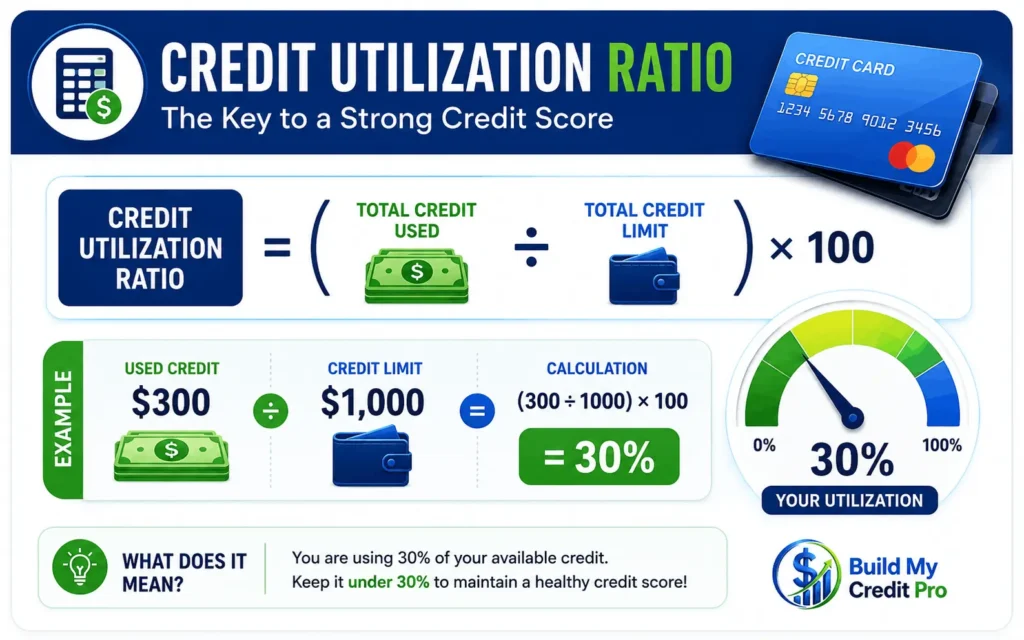
This formula is used by lenders and credit scoring models to measure your utilization credit behavior.
Real-Life Example of Utilization Credit Card Usage
Let’s say you have one credit card:
- Credit limit: $1,000
- Current balance: $300
👉 Your credit utilization ratio is:
- (300 ÷ 1000) × 100 = 30%
This is considered acceptable, but not ideal if you want a high score.
Another Example (Multiple Cards)
Now let’s look at a more realistic U.S. scenario:
- Card 1 limit: $2,000 → used $500
- Card 2 limit: $3,000 → used $1,000
👉 Total credit limit = $5,000
👉 Total used = $1,500
- (1500 ÷ 5000) × 100 = 30%
Even though your overall credit balance ratio is 30%, one card may still have higher usage, which can impact your score.
What Is the Ideal Credit Utilization Ratio?
There is no specific credit utilization ratio that can guarantee a particular credit score. However, keeping your credit card balances low is generally a sensible strategy.
The following examples explain what different credit utilization levels indicate:
- 0% utilization: You have no reported credit card balance.
- 1%–9% utilization: A low utilization level that may be useful when you are optimizing your credit profile.
- 10%–29% utilization: Generally below the commonly recommended 30% guideline.
- 30%–49% utilization: Your balances are using a larger share of your available credit, so reducing them may help.
- 50%–74% utilization: A relatively high level of credit usage.
- 75%–100% utilization: Your balances are approaching your credit limits, which can put pressure on your credit score.
These ranges are general educational guidelines, not official scoring cutoffs. The effect of utilization depends on the scoring model and the rest of your credit history.
Why Utilization Credit is So Important in the USA
In the U.S., most lenders rely on your FICO Score when evaluating your creditworthiness.
How Much It Affects Your Score
- Credit utilization ratio = about 30% of your credit score
- It’s considered the second most influential factor, right after your payment history
How Lenders Interpret Your Utilization Credit
Think of it this way:
- Low utilization credit → You’re in control of your finances
- High utilization credit → You might be relying too much on borrowed money
Even if you pay your bill in full every month, high utilization credit card balances can still signal risk.
What is a Good Credit Utilization Ratio?
A good credit usage ratio is below 30%, but for the best results, it should be under 10%. Lower utilization credit shows lenders that you manage credit responsibly and can help increase your credit score faster.
Ideal Ranges Explained
- ✅ 1% – 10% (Excellent): Best for high scores like 750–800
- 👍 10% – 30% (Good): Safe range for most users
- ⚠️ Above 30% (Risky): Can start lowering your score
- ❌ Above 75% (Very Risky): Major negative impact
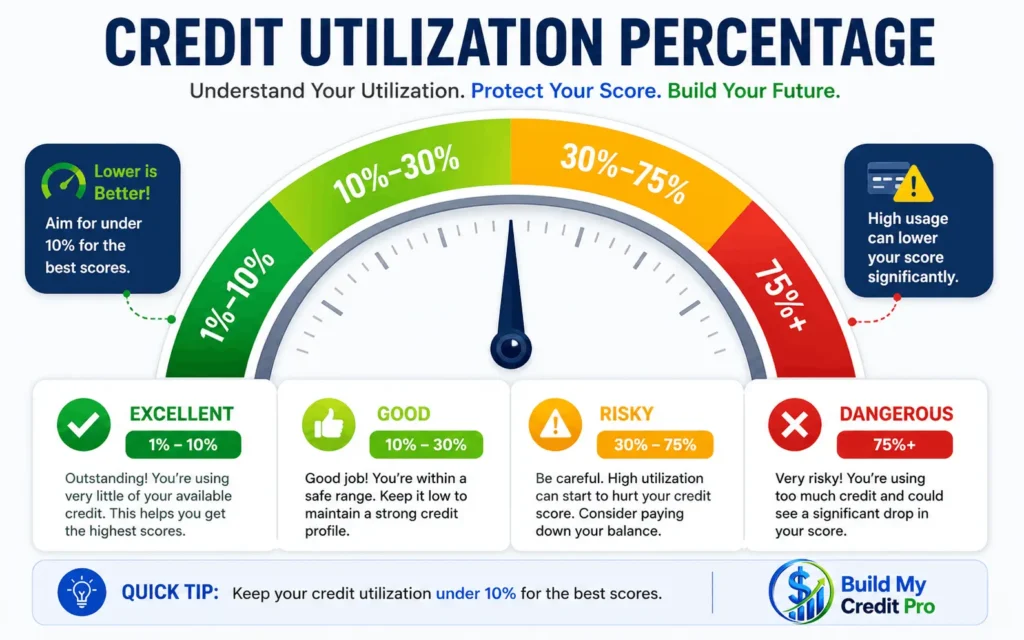
👉 If your goal is to build excellent credit, aim to keep your credit usage ratio under 10%.
Per Card vs Overall Utilization Credit Card Usage
Per Card Utilization
Each card has its own utilization credit ratio.
👉 Example:
- Limit: $1,000
- Used: $900 → 90% utilization (very high)
Overall Utilization
This includes all your cards combined.
👉 Example:
- Total limit: $10,000
- Total used: $2,000 → 20% utilization (good)
Why Both Matter
Many beginners think only overall utilization matters—but that’s not true.
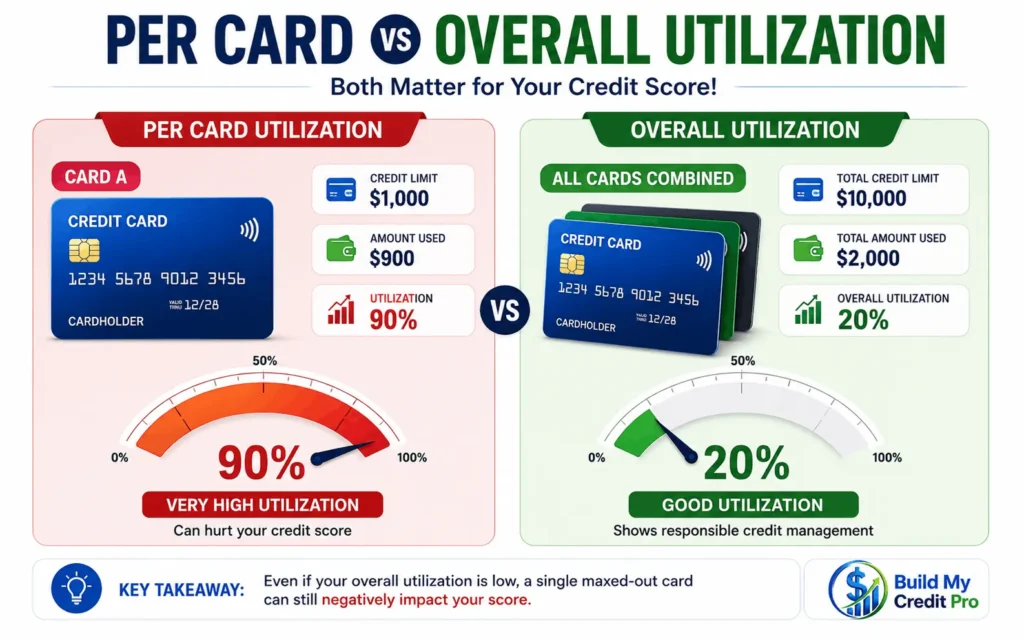
👉 A single maxed-out card can hurt your score, even if your total utilization credit looks fine.
When Credit Utilization is Reported (Critical for Beginners)
Credit usage is usually reported on your statement closing date, not your payment due date. This means your utilization credit card balance at that time is what affects your credit score.
Statement Date vs Due Date
- Statement Date: When your balance is reported to credit bureaus
- Due Date: When payment is due
👉 Important: Your credit usage ratio is based on what gets reported—not what you pay later.
Real-Life Timing Example
- You spend $900 on a $1,000 card
- Statement closes → 90% utilization reported
- You pay full amount later
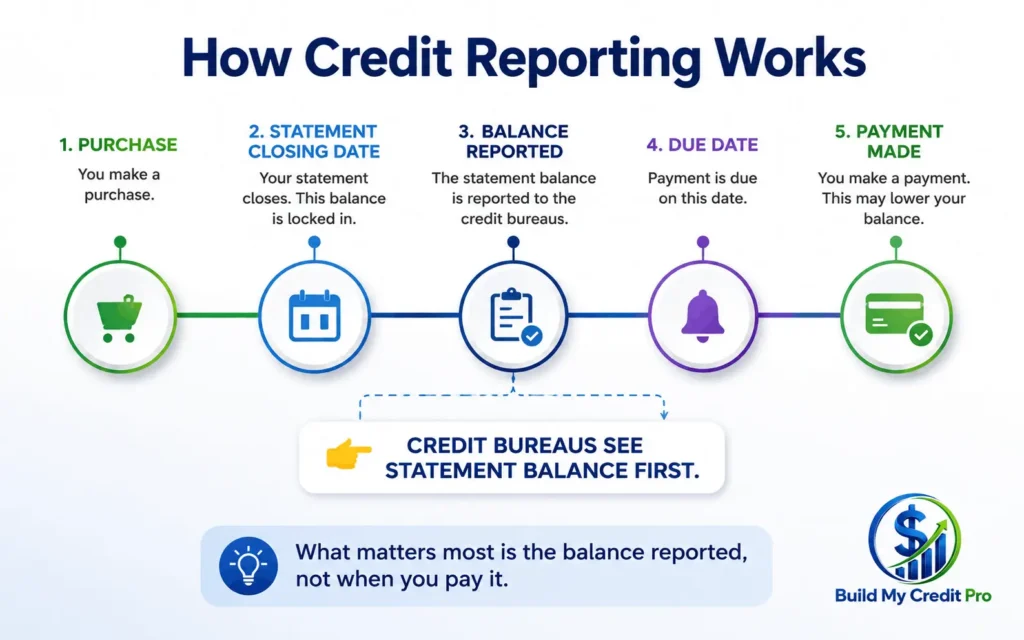
👉 Your score may still drop because of high utilization credit reported earlier.
Smart Strategies to Lower Your Utilization Credit Card Ratio
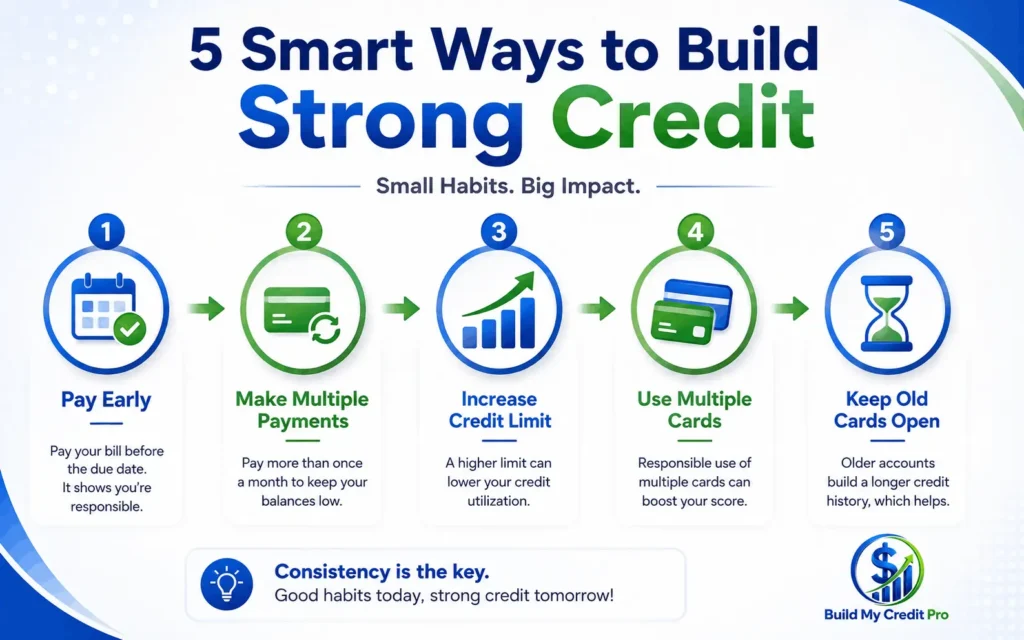
Pay Before the Statement Date
This is one of the most powerful tricks to control your credit usage ratio.
Make Multiple Payments Per Month
Paying weekly or bi-weekly helps keep your utilization credit low.
Request a Credit Limit Increase
Higher limits reduce your utilization credit card percentage instantly.
Use Multiple Cards Strategically
Spread expenses to maintain balanced utilization credit usage.
Keep Old Cards Open
Old accounts increase your total credit limit, lowering your credit usage ratio.
Common Mistakes Beginners Should Avoid
Maxing Out Cards
Using your full limit increases your utilization credit and lowers your score.
Closing Credit Cards
This lowers the amount of credit you have available and pushes your used credit percentage ratio higher.
Ignoring Reporting Dates
Your utilization credit card balance at reporting time matters the most.
Thinking Full Payment Fixes Everything
Even if you pay in full, high utilization at reporting can still hurt your score.
How Fast Can Credit Utilization Improve Your Score?
To improve utilization credit card usage fast, pay down your balances early, keep your usage below 30%, and increase your credit limit. These steps can quickly lower your used credit percentage ratio and boost your score.
Fast Results Explained
- Updates monthly
- Score can improve within 30 days
- Paying down balances gives immediate benefits
Tools to Monitor Utilization Credit in the USA
Tracking your credit usage ratio is easy with tools like:
These tools help you monitor and improve your utilization credit habits.
Advanced Strategy: The 1–5% Rule
Many credit experts recommend using only a very small portion of your credit.
Why This Works
- Shows active usage
- Keeps utilization extremely low
How Utilization Credit Helps You Reach an 800 Score
If your goal is a top-tier credit score:
- Keep credit usage ratio under 10%
- Combine with on-time payments
- Avoid unnecessary debt

This is one of the fastest ways to improve your credit profile in the U.S.
Frequently Asked Questions (FAQs) About Credit Utilization in the USA
What is a good credit utilization ratio?
Below 30% is a common guideline, while lower utilization may benefit your credit score.
How much of your credit should you use?
Try to keep your credit card balances low compared with your total credit limits.
Is 10% credit utilization better than 30%?
Generally, lower utilization can be beneficial, but no specific percentage guarantees a higher score.
What is the ideal credit utilization ratio to build credit?
Keeping utilization low, paying bills on time, and managing accounts responsibly can support healthy credit.
When is credit utilization reported?
Many card issuers report balances around the end of a billing cycle, but reporting dates vary.
Does credit card utilization affect your credit score?
Yes. Credit utilization can affect your score because it reflects how much of your available revolving credit you use.
How can I lower my credit utilization ratio?
Pay down credit card balances, avoid unnecessary spending, and consider requesting a credit limit increase if appropriate.
What is the difference between credit utilization and credit card usage?
Credit utilization measures your reported credit card balances against your available credit limits, rather than simply how often you use your cards.
Final Thoughts
Understanding your credit utilization ratio can help you make better decisions about credit card balances and available credit. For many U.S. consumers, keeping utilization below 30% is a useful starting guideline, while a lower ratio may be helpful when optimizing a credit profile.
Calculate your utilization regularly, pay bills on time, avoid unnecessary debt, and review your credit reports for errors. Focus on sustainable financial habits rather than chasing a specific percentage or expecting a guaranteed credit score increase.
Disclaimer: This article is for educational purposes only and does not constitute personalized financial advice. Credit score results vary by scoring model and individual credit history.