

If you’re wondering how to build credit from scratch, you’re not alone. Many Americans start with no credit history at all. Whether you’re a young adult, a recent graduate, a new immigrant, or someone who has never borrowed money before, building credit is one of the most important steps toward a strong financial future.
The good news is that building credit doesn’t have to be difficult. You don’t need a high income or thousands of dollars in the bank. By making smart financial choices and staying consistent, you can build good credit over time.
In this guide, you’ll learn exactly how to build credit from scratch, why your credit score matters, and the simple habits that can help you build a strong credit history.
Table of Contents
Why Is Building Credit Important?
Your credit history tells lenders how well you manage borrowed money. A good credit score can make life easier and save you money.
With good credit, you may be able to:
- Get approved for credit cards more easily.
- Qualify for lower interest rates on loans.
- Buy a car with better financing.
- Purchase a home with a lower mortgage rate.
- Rent an apartment more easily.
- Receive higher credit limits.
- Pay less interest over time.
If you don’t have any credit history, lenders don’t know whether you’re a responsible borrower. That’s why building credit early is so important.

What Is a Credit Score?
Think of your credit score as your financial reputation. It’s a number that tells lenders how trustworthy you are when it comes to borrowing money and paying it back on time. Most credit scores range from 300 to 850.
Here’s a general idea of what those numbers mean:
| Credit Score | Rating |
|---|---|
| 800–850 | Exceptional |
| 740–799 | Very Good |
| 670–739 | Good |
| 580–669 | Fair |
| 300–579 | Poor |
If you’re just starting, you may not have a credit score yet. That’s completely normal. Once you begin using credit responsibly, you’ll eventually receive your first score.
How Much Time Does It Really Take to Build Good Credit?
Most people can get their first credit score within three to six months after opening a credit account that reports to the major credit bureaus.
Building an excellent credit score takes longer. It usually requires years of making payments on time and using credit responsibly.
The key is to stay patient and consistent.
Step 1: Get a Secured Credit Card

One of the easiest ways to learn how to build credit from scratch is by opening a secured credit card.
With a secured credit card, you pay a refundable security deposit upfront. The deposit helps reduce the lender’s risk and is usually returned if you manage the account responsibly. For example, if you deposit $300, your credit limit will usually be $300.
Even though you’re using your own money as security, the card works like a regular credit card. If the card issuer reports your payments to the major credit bureaus, every on-time payment helps build your credit history.
Tips for using a secured credit card:
- Make only small purchases each month.
- Pay off your credit card balance on time, ideally in full, to avoid interest charges.
- Only charge what you know you can comfortably repay without straining your budget.
- Avoid using your entire credit limit.
These simple habits can help you build a positive payment history.
Step 2: Become an Authorized User
Another easy way to build credit is by becoming an authorized user on someone else’s credit card.
A trusted parent, spouse, or family member with excellent credit can add you to their account.
If the credit card company reports authorized users to the credit bureaus, you may benefit from the account’s positive payment history and long credit history.
This can give your credit profile a helpful boost without opening your own new account.
Step 3: Try a Credit-Builder Loan
If you don’t qualify for a traditional loan, a credit-builder loan may be a great option.
Instead of receiving the money immediately, the lender places it into a savings account.
Just like most loans, you’ll make regular monthly payments until you’ve paid back everything you borrowed. After you’ve made all your payments, the money is released to you.
At the same time, your payment history is reported to the credit bureaus, helping you build credit.
Step 4: Report Your Rent Payments
Many Americans pay rent every month, but those payments often don’t appear on credit reports.
Some rent reporting services can report your on-time rent payments to the major credit bureaus.
If you always pay your rent on time, this can be another easy way to build credit without borrowing more money.
Step 5: Report Utility and Phone Bills
Some services allow you to add positive payment history from bills you already pay every month, including:
- Cell phone bills
- Internet service
- Electric bills
- Water bills
- Some streaming services
These payments may help strengthen your credit profile when reported to the credit bureaus.
Step 6: Always Pay Your Bills on Time
This is the most important rule when learning how to build credit from scratch.
Your payment history plays the most important role in determining your credit score.
Even one late payment can hurt your credit and stay on your credit report for several years.
To avoid missing payments:
- Set up automatic payments.
- Use payment reminders on your phone.
- Pay a few days before the due date whenever possible.
- Consistent, on-time payments build confidence with lenders over time.
Step 7: Keep Your Credit Card Balance Low
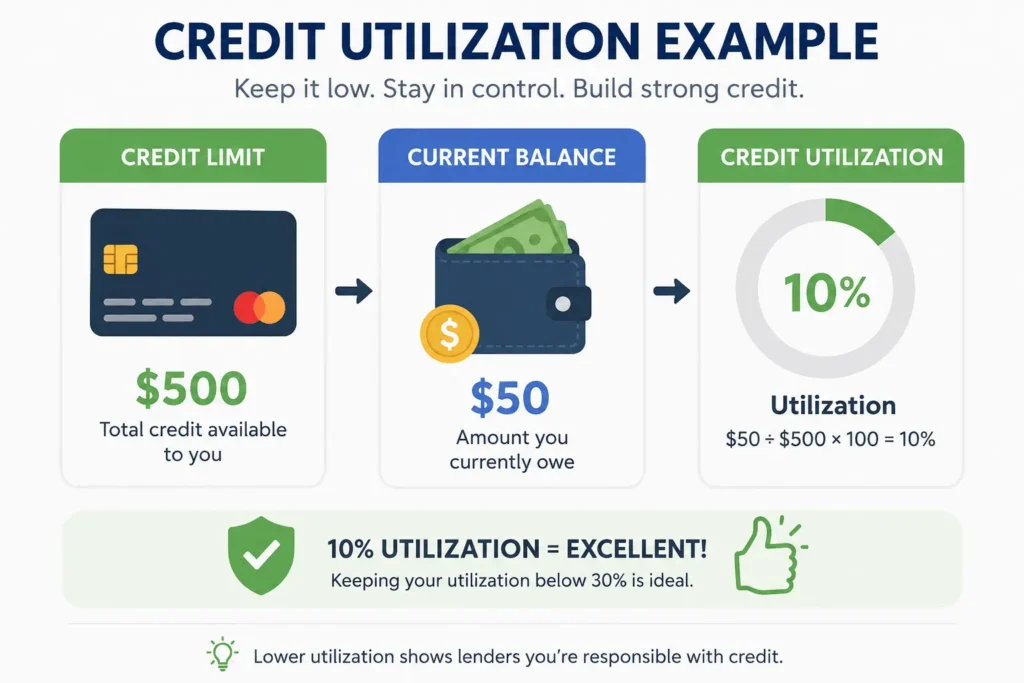
Your credit utilization is the percentage of your available credit that you’re using.
For example:
- Credit limit: $500
- Balance: $50
- Your credit utilization is only 10%.
Experts recommend keeping your credit utilization below 30%, but staying under 10% is even better if possible.
A low balance shows lenders that you use credit responsibly.
Step 8: Don’t Apply for Too Many Credit Cards
Every time you apply for a credit card or loan, the lender may perform a hard credit inquiry.
Too many applications in a short period can temporarily lower your credit score.
Instead of opening several accounts, focus on managing one account well before applying for another.
Slow and steady usually wins when building credit.
Step 9: Check Your Credit Reports Regularly
It’s a good idea to review your credit reports several times each year.
Checking your reports can help you:
- Find mistakes.
- Spot identity theft.
- Track your progress.
- Make sure your payments are being reported correctly.
- Monitoring your credit helps you stay in control of your financial future.
Common Mistakes to Avoid
Many first-time credit users make small errors that can delay their financial goals.
Avoid these common problems:
- Maxing Out Your Credit Card
- Using all of your available credit can lower your score.
- Missing Payments
- Always pay on time, even if it’s only the minimum payment.
- Closing Your First Credit Card
- Keeping older accounts open can help improve your credit history.
- Applying for Too Many Accounts
- Too many applications can make lenders think you’re having financial problems.
- Ignoring Your Credit Reports
- Review your reports regularly to catch errors early.
A Simple Six-Month Plan to Build Credit

Month 1
- Start with a secured credit card and make a small purchase to begin building credit.
Month 2
- Continue making small purchases and pay your balance in full.
Month 3
- Keep your credit usage under control and make every payment by the due date.
Month 4
- Check your credit report and continue using your card responsibly.
Month 5
- Avoid applying for new credit unless necessary.
Month 6
- You may receive your first credit score. Keep following the same healthy financial habits.
Tips to Build Excellent Credit Faster
While there’s no overnight shortcut, these habits can help you build strong credit over time:
- Pay every bill on time.
- Keep your credit card balances low.
- Only borrow what you can afford to repay.
- Leave older credit accounts open whenever possible.
- Build your credit slowly and consistently.
- Good credit is built through responsible habits, not quick fixes.
Frequently Asked Questions About Building Credit from Scratch
How do I build credit from scratch with no credit history?
If you’re starting with no credit history, consider getting a secured credit card, trying a credit-builder loan, or asking a trusted family member to add you as an authorized user. Make all payments on time to build a positive credit history.
How Much Time Does It Take to Establish Credit From Scratch?
You may establish a credit score within about six months, but building good credit can take longer with consistent responsible habits.
What are the ways to build credit without owning a credit card?
Yes. Credit-builder loans and other accounts that report payments to credit bureaus can help you build credit without a traditional credit card.
What is the easiest way to start building credit?
A secured credit card is often a good option for beginners because it is designed for people with limited or no credit history.
Do I need to carry a balance to build credit?
No. You can build credit by using your card responsibly and paying your statement balance in full and on time.
What credit utilization should I maintain when building credit?
Try to keep your credit card balances low compared with your total credit limit and avoid maxing out your cards.
Does checking my own credit score hurt my credit?
No. Checking your own credit score or credit report is generally considered a soft inquiry and does not hurt your score.
What mistakes should I avoid when building credit from scratch?
Avoid late payments, maxing out credit cards, and applying for too many accounts in a short time.
Final Thoughts
Learning how to build credit from scratch is one of the best financial decisions you can make. Everyone starts somewhere, and you don’t need perfect finances to build a strong credit history.
Start with one simple step, like opening a secured credit card or becoming an authorized user. Make every payment on time, keep your balances low, and be patient.
Over time, those small actions can lead to a higher credit score, better loan approvals, lower interest rates, and more financial freedom.
Every smart financial choice moves you closer to better credit, even if you make a few mistakes along the way. It’s about being consistent. Every responsible payment brings you one step closer to a stronger financial future.