
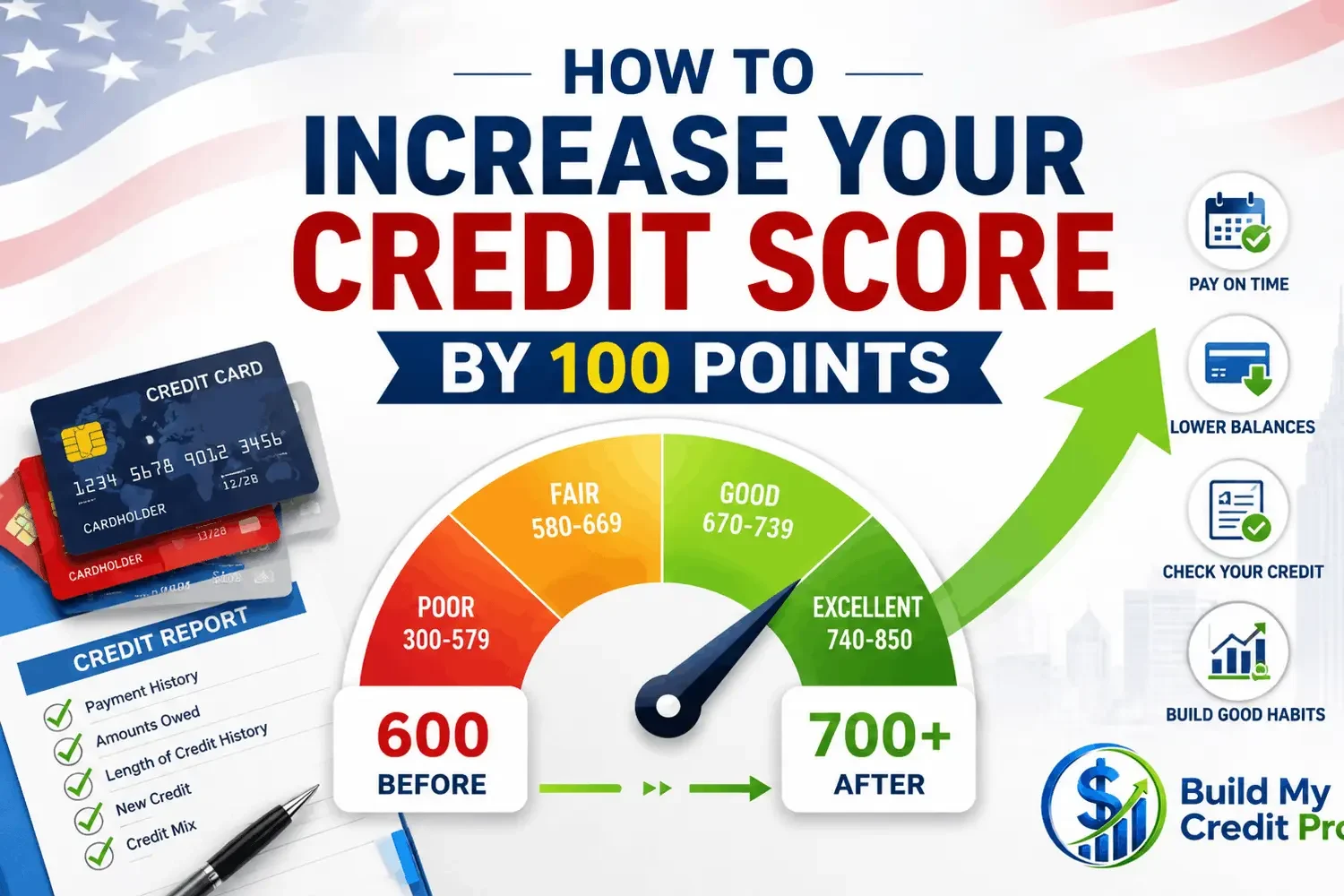
To learn How to Increase Your Credit Score by 100 Points, start by understanding what is affecting your credit and which changes may help improve it. Although a 100-point increase is possible for some people, results depend on your current credit score, credit history, outstanding debts, and the scoring model used.
The most effective steps include paying bills on time, reducing credit card balances, reviewing your credit reports, and correcting inaccurate information.
These steps can help you develop better credit management habits, but no method can promise a particular increase in your credit score or guarantee how quickly it will improve.
This guide covers 10 practical strategies to strengthen your credit profile, avoid common credit mistakes, and monitor your progress over time.
Official U.S. government consumer credit information
Table of Contents
Can You Increase Your Credit Score by 100 Points?
Yes, some people can improve their credit scores by 100 points, particularly when their reports contain errors, high credit card balances, or recent payment problems that they can address. The outcome may differ depending on each individual’s circumstances.
For example, reducing high revolving credit balances may help someone whose credit utilization is elevated. Correcting inaccurate negative information may also make a difference if that information was affecting the score.
If you already have a strong credit history and a high score, gaining another 100 points may be more difficult. Focus on improving the factors you can control rather than expecting a particular result.
How Can You Increase Your Credit Score by 100 Points?
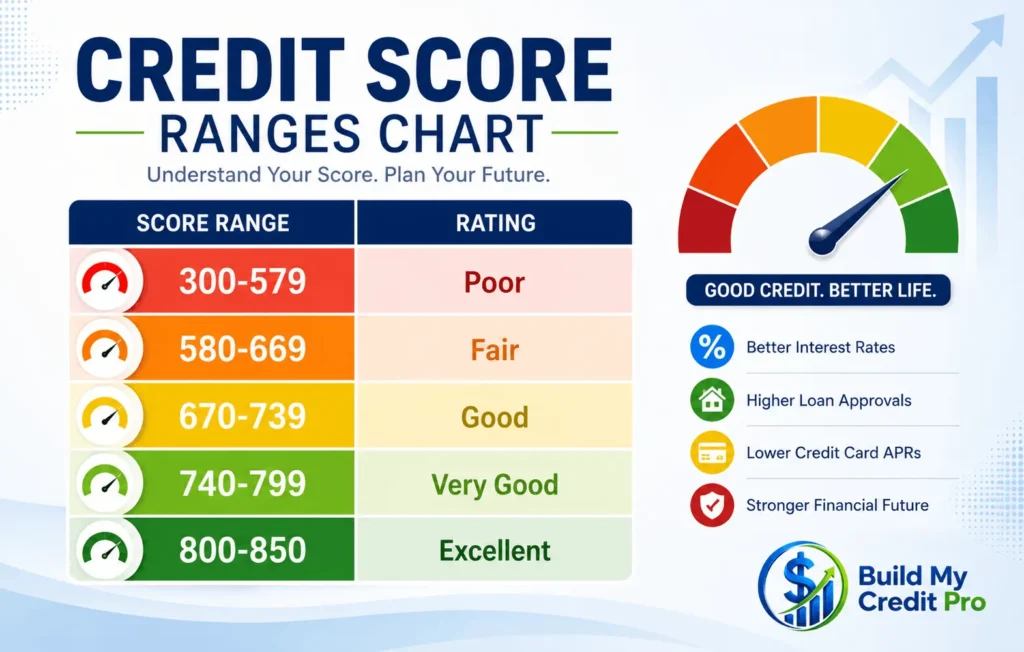
How to increase your credit score by 100 points often comes down to improving the key factors that influence your credit report. Paying bills on time, lowering credit card balances, fixing report errors, and avoiding unnecessary credit applications can all help raise your score.
Pay Bills on Time
Paying bills on time is one of the fastest ways to build a positive credit history. Payment history is the largest factor used in most credit scoring models.
For example, if Sarah from Texas has a credit card payment due on the 15th of each month, setting up automatic payments can help her avoid late fees and protect her credit score.
Even one missed payment can remain on a credit report for years, so consistency matters.
Lower Credit Utilization
Lowering credit utilization can quickly improve your credit score if you’re carrying high credit card balances.
Let’s say your total credit limit is $10,000 and your current balance is $4,000. Your credit utilization ratio is 40%.
Reducing your balance to $1,000 lowers your credit utilization rate to 10%, a level that is typically considered positive by most credit scoring systems.
Fix Credit Report Errors
Fixing credit report errors can remove inaccurate information that may be lowering your score unfairly.
For example, John from Florida discovered a credit card account on his report that did not belong to him. After filing a dispute and having the account removed, his credit score improved within a few months.
Always review your credit reports carefully for mistakes.
Avoid New Hard Inquiries
Avoiding new hard inquiries can help protect your score while you’re working to rebuild credit.
Applying for several credit cards within a short period may signal financial stress to lenders. Avoid seeking new credit unnecessarily, and submit applications only when they are truly needed.
Understanding Credit Scores in the USA
What Is a Credit Score?
A credit score is a three-digit number that helps lenders determine how likely you are to repay borrowed money.
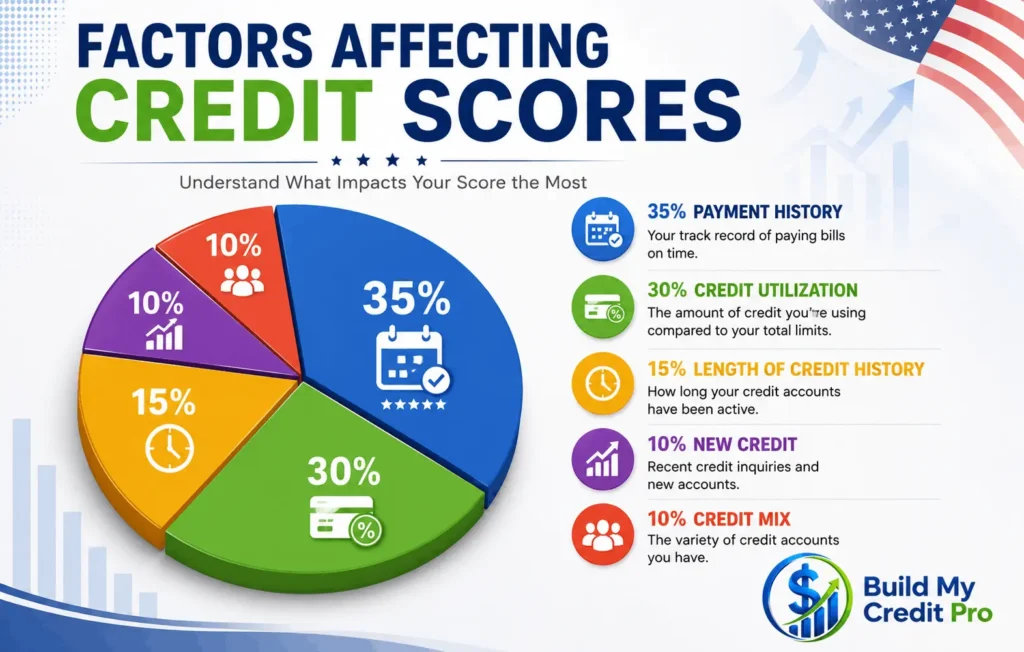
American credit scores generally fall within a scoring range of 300 at the low end and 850 at the high end. The higher your score, the less risky you appear to lenders.
A credit score can play an important role when seeking approval for:
- Auto loans
- Mortgages
- Apartment rentals
Credit Score Ranges Explained
Credit score ranges help lenders evaluate your creditworthiness.
Typical ranges include:
- Poor: 300–579
- Fair: 580–669
- Good: 670–739
- Very Good: 740–799
- Excellent: 800–850
For example, someone with a 760 credit score may qualify for better loan terms than someone with a 620 score.
Why Lenders Care About Your Credit Score
Your credit score helps lenders assess risk. A higher score often leads to better borrowing opportunities and lower interest rates.
For example, two borrowers may apply for the same car loan. The applicant with a higher credit score could receive a lower interest rate and save hundreds or even thousands of dollars over the life of the loan.
Can a Credit Score Improve by 100 Points in a Short Time?
Increasing your credit score by 100 points is possible for many consumers, especially if their score has been affected by high credit card balances, missed payments, or reporting errors.
However, results vary depending on your individual credit profile.
Factors That Determine Your Results
Your credit score improvement timeline is affected by several key factors.
These include:
- Payment history
- Age of credit accounts
- Total debt
- Credit mix
- Recent credit inquiries
Someone starting with a score of 580 may see larger gains than someone who already has a score above 700.
How Fast Credit Scores Can Improve
Many people are surprised by how quickly their credit score can improve, but consistent effort and patience remain essential.
For example, if you pay off a large credit card balance, the updated information may be reported within one or two billing cycles. This could result in a noticeable score increase within a few weeks.
Other improvements, such as building a long history of on-time payments, may take several months to show their full impact.
The most successful credit-building strategy is consistency. Small positive actions repeated every month can lead to substantial score increases over time.
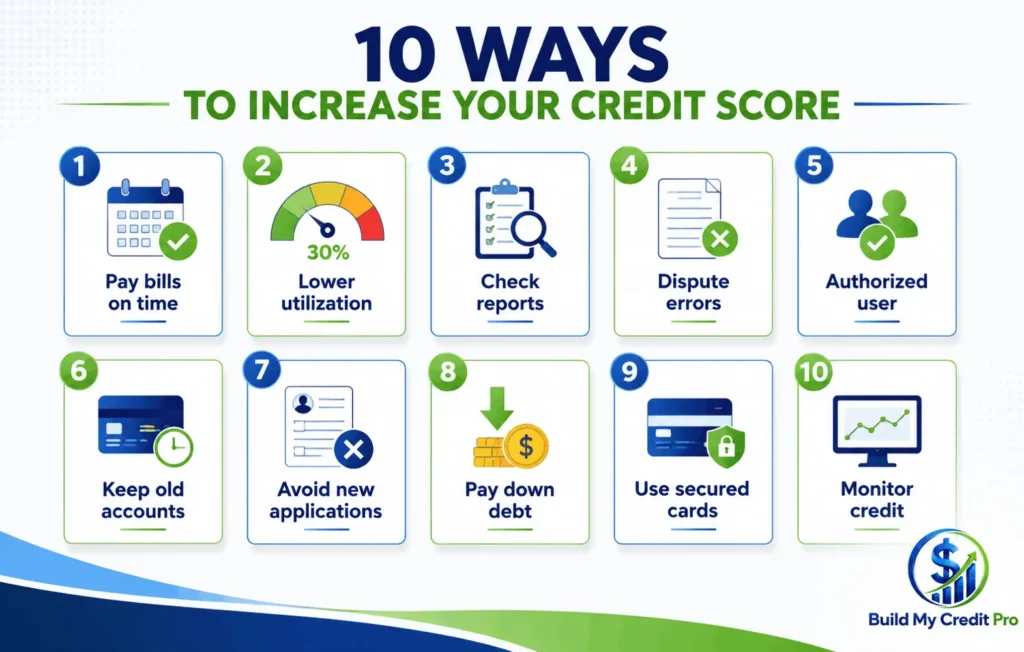
10 Ways to Increase Your Credit Score by 100 Points
A 100-point increase is possible for some people, particularly when there are significant issues that can be corrected, such as high credit card balances or inaccurate information on a credit report.
However, everyone’s situation is different. Instead of focusing only on reaching a specific number, concentrate on building a stronger credit profile through consistent financial habits.
Here are 10 strategies to consider.
1. Pay Every Bill on Time
Paying every bill on time is one of the most effective ways to increase your credit score by 100 points. Your payment history makes up a large portion of your credit score, so even one late payment can have a negative impact.
For example, if you consistently pay your credit card, auto loan, and utility bills before the due date, lenders see you as a responsible borrower. By setting up autopay, you can make timely payments more consistent and avoid accidental late payments.
2. Lower Your Credit Card Balances
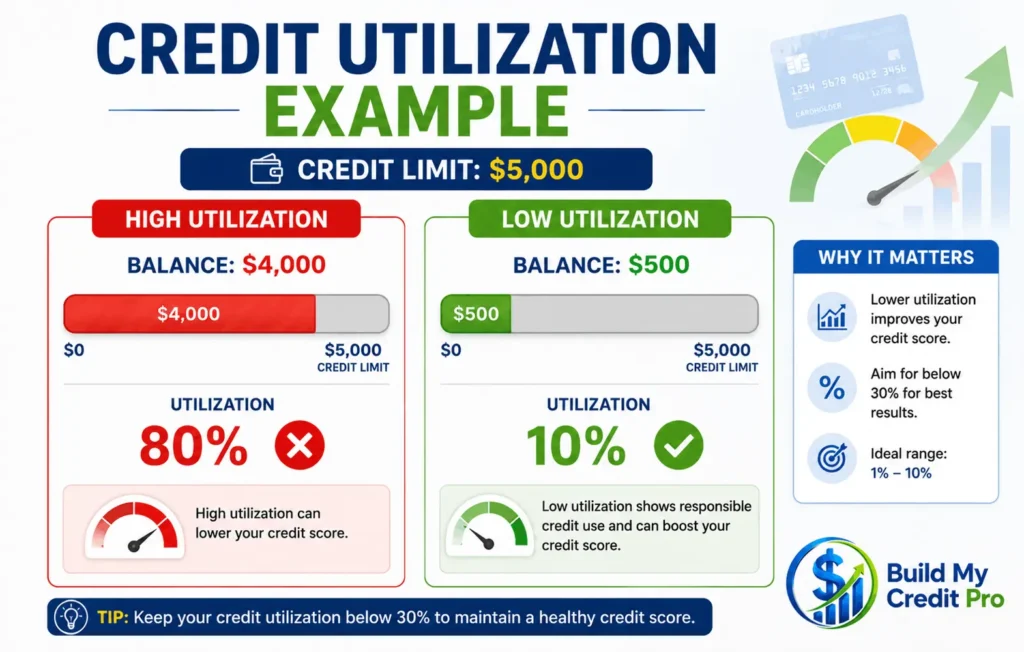
Credit card balances are an important part of the amounts-owed category. Carrying high balances relative to your available credit can negatively affect your FICO® Score.
Paying down revolving balances can reduce your credit utilization and may help your score, particularly if your current utilization is high.
Start with the cards carrying the highest balances relative to their credit limits. Continue making at least the required minimum payments on all accounts while directing additional money toward reducing balances.
3. Keep Your Credit Utilization Low
Aiming for a utilization rate below 10% can provide even greater credit score benefits.
Many consumers with excellent credit scores keep their utilization in the single digits.
For example, if your credit card limit is $10,000, keeping your balance below $1,000 may help maximize your score potential.
4. Check Your Credit Reports for Errors
An inaccurate item on your credit report can potentially hurt your credit profile.
Review your reports for:
- Accounts Not Associated With You
- Incorrect account balances
- Incorrect credit limits
- Incorrect late-payment information
- Duplicate accounts
- Incorrect account status
- Identity information that is inaccurate
The CFPB advises consumers to review their credit reports regularly and dispute any inaccurate or incomplete information.
5. Dispute Inaccurate Information
If you find inaccurate information, you can submit a dispute to have it reviewed.
The CFPB recommends notifying both the credit bureau and the company that provided the incorrect information. Include an explanation of the problem and supporting documents when appropriate.
Correcting legitimate errors may improve your credit profile, but a dispute does not guarantee a credit-score increase.
6. Avoid Unnecessary Hard Inquiries
Applying for new credit may lead to a hard credit inquiry, depending on the lender and type of application.
A single inquiry generally has a relatively small effect, but applying for multiple new accounts within a short period can have a greater impact, especially for people with shorter credit histories.
Before applying for a new credit card or loan, assess whether opening the account is truly necessary.
Checking your own credit report does not create a hard inquiry that affects your FICO® Score.
7. Limit New Credit Applications
Opening multiple new credit accounts within a short timeframe may impact your overall credit profile.
New credit represents 10% of a FICO® Score, and recently opened accounts can also affect the length of your credit history.
Instead of applying for several accounts at once, apply only when the credit is necessary and make sure you understand the account’s fees, terms, and potential impact.
8. Keep Older Credit Accounts Open When Appropriate
The length of your credit history is another factor considered by FICO® Scores.
FICO considers factors such as the age of your oldest account, the age of your newest account, and the average age of your credit accounts.
Closing an older credit card does not necessarily hurt your credit score. However, it may reduce your available credit and increase your credit utilization if you have balances on other accounts.
Consider the account’s annual fee, usefulness, and overall financial impact before closing it.
9. Consider Becoming an Authorized User
Becoming an authorized user on a well-managed credit card may help improve your credit history when the account is reported to the credit bureaus.
The impact can vary depending on how the account is reported and which credit scoring model is used.
Before joining an account, check that the primary cardholder consistently pays on time and keeps balances low. Late payments or high credit utilization could negatively affect your credit profile instead.
10. Build a Consistent Positive Credit History
Improving your credit score is usually a process rather than a one-time action.
Continue to:
- Pay bills on time.
- Keep revolving balances manageable.
- Avoid unnecessary new credit.
- Monitor your credit reports.
- Maintain responsible credit accounts.
- Address legitimate credit-report errors.
Over time, these habits can help create a stronger credit profile.
Quick Strategies to Improve Your Credit Score
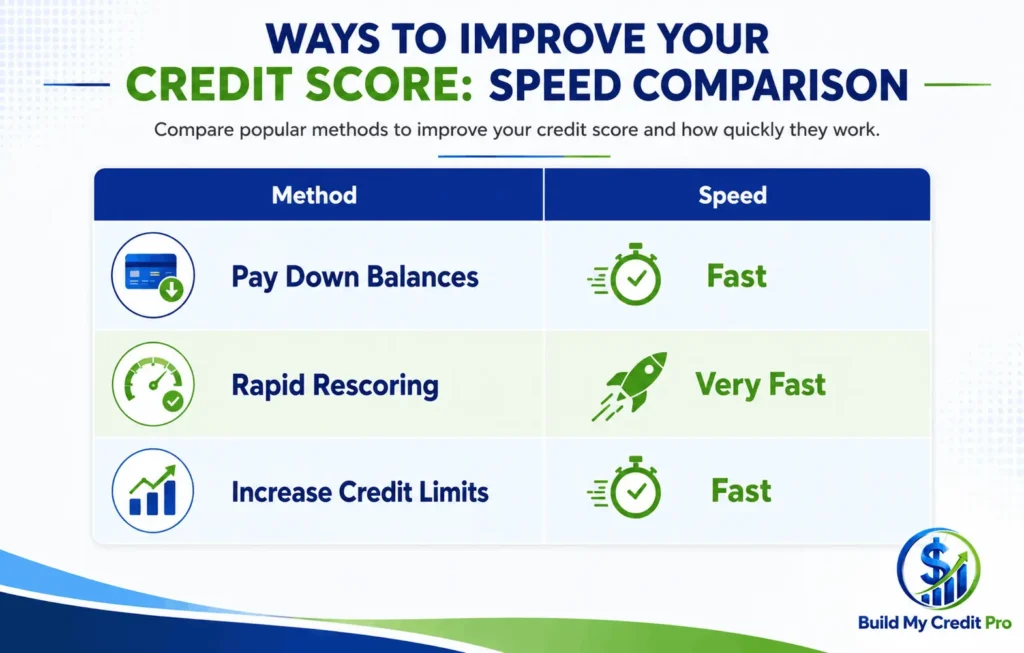
Rapid Rescoring
Rapid rescoring is a process sometimes used by mortgage lenders to update credit information quickly after errors are corrected or balances are paid down.
This option is not available to everyone, but it may help borrowers seeking a mortgage approval.
Paying Down Credit Card Balances
Paying down credit card balances is often one of the fastest ways to increase your credit score by 100 points.
A reduction in reported balances may lower your utilization rate, which can have a positive effect on your credit score once the updated information reaches the credit bureaus.
Increasing Available Credit
Increasing available credit can reduce your utilization ratio if spending remains the same.
For example, if your credit limit increases from $5,000 to $10,000 while your balance stays at $1,000, your utilization falls from 20% to 10%.
Common Credit Score Mistakes to Avoid
Closing Old Accounts
Closing old accounts can shorten your average account age and reduce available credit.
Before closing an account, consider how it may affect your credit score.
Missing Payment Due Dates
Failing to make payments by their due dates can have a serious negative impact on your credit score.
Even a single late payment can remain on your credit report for years and may affect future loan approvals.
Maxing Out Credit Cards
Maxing out credit cards increases your utilization ratio and may signal financial stress to lenders.
Using nearly all of your available credit—such as $4,900 of a $5,000 limit—can produce a high utilization ratio and put downward pressure on your credit score.
Applying for Too Much Credit
Applying for too much credit within a short period can lead to multiple hard inquiries.
This may temporarily lower your score and raise concerns among potential lenders.
Can You Raise Your Credit Score by 100 Points Quickly?
Within 30 Days
Increasing your credit score within 30 days is possible in some situations.
Paying down high credit card balances or correcting reporting errors may produce noticeable improvements within one reporting cycle.
Within 3–6 Months
Increasing your credit score within 3 to 6 months is a realistic goal for many Americans.
Consistently paying bills on time, reducing debt, and maintaining low utilization can create meaningful progress during this period.
For example, an individual with a 620 credit score may be able to move into the good credit range over time by maintaining strong financial habits and using credit responsibly.
Within 12 Months
Increasing your credit score within 12 months is achievable for many consumers who stay committed to improving their credit.
Individuals recovering from missed payments, high debt levels, or past credit problems often see substantial improvements over a year of responsible credit management.
The key is consistency. Small actions repeated month after month often lead to the biggest long-term credit score gains.
Free Tools to Track Your Credit Score Progress
Credit Monitoring Services
Credit monitoring services can help you track changes in your credit score and receive alerts when important updates appear on your credit report.
Many banks and credit card companies now offer free credit score monitoring as a customer benefit. These services can notify you about new accounts, hard inquiries, or significant changes to your credit profile.
For example, if your credit score increases after paying down a large credit card balance, a credit monitoring service may alert you as soon as the update is reported.
Regular monitoring helps you stay informed and identify potential issues before they become serious problems.
Credit Report Websites
Credit report websites allow you to review the information that lenders see when evaluating your creditworthiness.
Checking your credit reports regularly is one of the smartest steps you can take when learning how to increase your credit score by 100 points.
When reviewing your reports, pay attention to:
- Account balances
- Payment history
- Personal information
- Open and closed accounts
- Credit inquiries
For example, if you notice an account that doesn’t belong to you, reporting the error quickly may help prevent unnecessary damage to your credit score.
Mobile Credit Tracking Apps
Mobile credit tracking apps make it easy to monitor your credit score directly from your smartphone.
Many apps provide:
- Credit utilization tracking
- Personalized credit tips
- Alerts about major credit changes
For example, if your utilization rate rises above 30%, a credit tracking app may notify you so you can take action before it affects your score.
These tools can help you stay motivated and measure your progress over time.
FAQ: How to Increase Your Credit Score by 100 Points
How can I increase my credit score by 100 points?
Pay bills on time, lower credit card balances, dispute report errors, and manage accounts responsibly.
How long does it take to increase a credit score by 100 points?
The timeline varies based on your credit history, balances, payment record, and scoring model.
Can I raise my credit score by 100 points overnight?
A 100-point overnight increase is unlikely for most people. Results depend on updated credit information and the scoring model.
Can I increase my credit score by 100 points in 30 days?
It is possible to see changes within 30 days, but a 100-point increase is not guaranteed.
Does paying off credit card debt improve your credit score?
Yes, reducing credit card balances may lower utilization and improve your score.
Does checking my own credit score lower it?
No. Checking your own credit score or report generally does not affect your score.
Can disputing credit report errors increase my score?
Yes, correcting inaccurate information may improve your score if the errors were hurting it.
What is the fastest way to improve a credit score?
Paying down high credit card balances and correcting genuine credit report errors may help, depending on your situation.
Final Thoughts
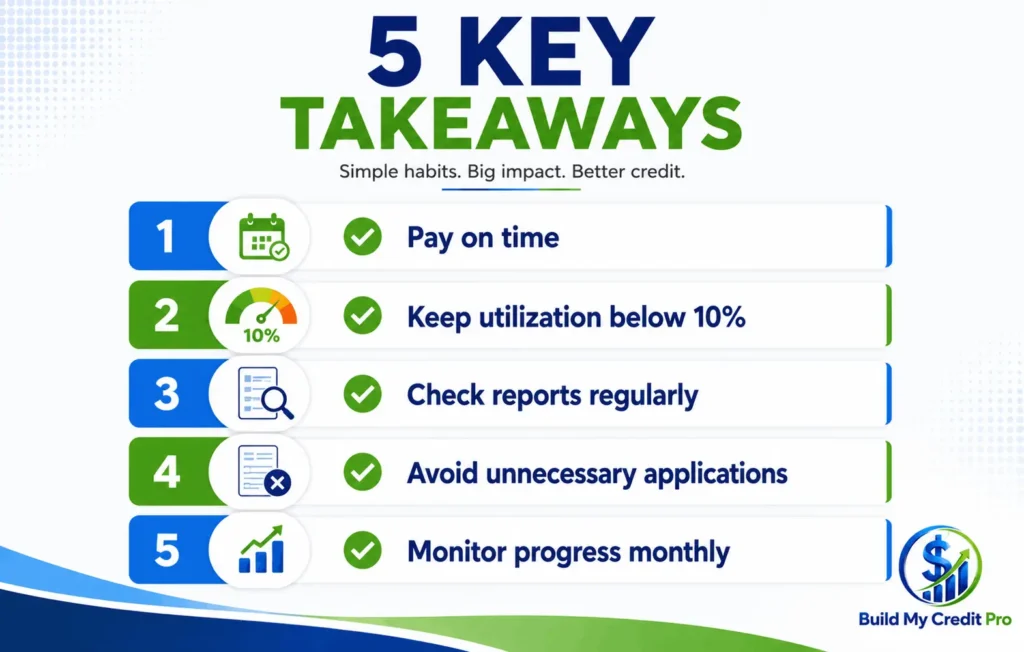
How to increase your credit score by 100 points is not about finding a quick fix. It’s about developing smart financial habits and consistently making decisions that strengthen your credit profile.
Simple actions such as paying bills on time, reducing credit utilization, reviewing credit reports for errors, and avoiding unnecessary debt can make a significant difference over time.
For example, someone with a credit score of 580 who consistently pays bills on time, lowers credit card balances, and corrects report errors may be able to move into the good credit range within several months.
The key is patience and consistency. Every positive action you take today can help build a stronger credit score tomorrow.
By following the strategies in this guide, you’ll be in a better position to increase your credit score, qualify for better financial products, and achieve your long-term financial goals in the United States.